
Wood Fence
Installation
Cedar or treated pine, built board by board on your line. See your down payment and bi-weekly payment options before anyone calls you. Flexible monthly payments · no credit check, ever.
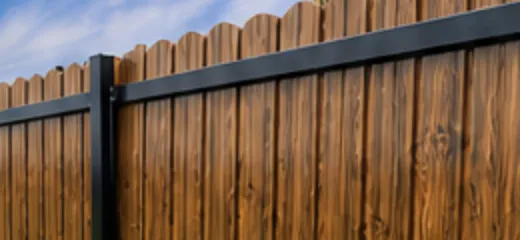
Why Do Homeowners Pick Wood?
Wood gives you the most private fence for the least money. A 6-foot cedar or treated pine privacy fence usually costs 20 to 35 percent less than vinyl at the same height, blocks sightlines completely, and repairs one picket at a time instead of one panel at a time. Stained every 2 to 3 years, cedar runs 15 to 20 years.
-
Most privacy per dollar
A 6-foot wood privacy fence typically runs 20 to 35 percent less than vinyl at the same height. It is still the cheapest way to make a backyard fully private.
-
Built to your yard
Wood is cut on site, so it follows slopes and odd property lines board by board. Heights of 4, 6, and 8 feet; picket, privacy, or board-on-board.
-
Cheap to repair
One cracked picket swaps out in minutes for a few dollars. Vinyl and aluminum damage usually means replacing an entire panel.
-
15 to 20 year cedar life
Stained and sealed every 2 to 3 years, cedar runs 15 to 20 years. Put it on steel posts and the frame outlives the boards.
Cedar, Pine, or Treated: Which Wood Should You Pick?
Treated pine is the value pick: strong, treated against rot, and the lowest-cost wood we install. Western Red Cedar costs roughly 30 to 50 percent more but resists rot and insects naturally and holds a straighter line as it dries. Untreated whitewood is the big-box bargain wood, and we don't build with it. Every build rides on treated or steel posts either way.
- The value pick
Pressure-treated pine
- Treated against rot and insects; strongest of the three
- Takes stain well once it dries out
- Expect 10 to 15 years; longer with steady maintenance
- Can move as it dries, so we string-line the top and let posts cure before boards go on
- The premium standard
Western Red Cedar
- Naturally rot- and insect-resistant, no chemical treatment
- Stays straighter and lighter than pine as it dries
- Roughly 30 to 50 percent more than treated pine
- 15 to 20 years with stain and seal every 2 to 3 years
- The one we skip
Untreated whitewood
- What bargain big-box panel deals are made of
- Warps early and runs 8 to 12 years at best
- No treatment, so ground contact rots it fast
- We don’t build with it. Pine or cedar only.
What's Actually in the Fence?
- Pickets
- 5/8 in × 5-1/2 in dog-ear, #2 grade or better, cedar or treated pine
- Rails
- Three 2×4 rails on every 6-foot build. Two-rail fences sag; that’s the corner cheap builds cut.
- Posts
- 4×4 treated pine set 24 to 30 inches deep in concrete, 8 feet on center. 8-foot fences go 30 to 36 inches.
- Hardware
- Galvanized ring-shank nails; exterior-grade screws and hinges on gates
- Steel upgrade
- 2-3/8 in galvanized steel posts in place of wood 4×4s
Are Steel Posts Worth the Upgrade?
Usually, yes. The most common wood-fence failure is the post rotting at the ground line, not the boards wearing out. Galvanized steel posts take that failure off the table and hold a solid privacy fence upright in wind that leans wood posts over. The upgrade adds about 10 percent to a typical project. Planning to stay past year ten? It pays for itself.
Stain and Seal: The Maintenance That Decides Lifespan
A semi-transparent exterior stain with sealer is what keeps pickets from graying, cupping, and splitting. New wood has to dry out before it will take stain, then it needs a recoat every 2 to 3 years. That one habit is most of the difference between a 10-year fence and a 20-year fence.
What Would My Wood Fence Payment Be?
Most wood fence projects with Holden Fence start with a low down payment, then a fixed bi-weekly payment on a 3, 4, or 5-year plan. No Credit Check Financing is available — your score is never pulled — and there is no early payoff penalty. The instant estimator prices your exact fence line and shows your down payment and bi-weekly payment in about 30 seconds.
| Build | Spec notes |
|---|---|
| 6 ft treated pine privacy | 5/8 in pickets, three 2×4 rails, 4×4 posts 8 ft on center |
| 6 ft cedar privacy | #2-grade-or-better cedar pickets on treated posts |
| 6 ft board-on-board cedar | Overlapped pickets, no gaps as boards dry |
| 8 ft privacy | Posts set 30 to 36 in deep, 3 to 4 rails |
| 4 ft picket | Spaced pickets, two rails |
| Steel-post upgrade | 2-3/8 in galvanized steel in place of wood 4×4s |
| Tear-out & haul-off | Old fence out, posts pulled, debris hauled |
| Walk gate | 2×4 frame with diagonal brace or steel gate frame |
| Double drive gate | 10 to 12 ft opening for trailers and mowers |
- Bi-weekly · 3-year plan
- $92
- Bi-weekly · 4-year plan
- $78
- Bi-weekly · 5-year plan
- $69
Example for illustration only, not an offer of credit. Financing is subject to approval; your exact down payment, payment amount, and terms are set at approval and shown to you before you sign anything.
What Happens on Install Day?
Most wood fences go in over one or two days on site. Posts get set in concrete on day one and cure overnight; rails, pickets, and gates go on day two. From approved quote to finished fence, plan on one to three weeks depending on materials, permits, and weather. You get a scheduled date when you approve the quote.
-
Site prep and layout
Utility lines get located before a hole is dug. We confirm property pins, mark the run with string line, and tear out the old fence if it’s in the quote.
-
Set the posts
Holes go 24 to 30 inches deep, 8 feet on center. Posts are set in concrete, checked plumb twice, and the concrete cures overnight before any board goes on.
-
Rails, pickets, gates
Three 2×4 rails per section, pickets nailed to a string line so the top runs straight, gates hung and latched last so they swing true.
-
Walkthrough and cleanup
You walk the line with the crew: gates, level, picket faces. We haul every scrap and go over the 1-Year Workmanship Warranty before we leave.
Recent Wood Fence Projects
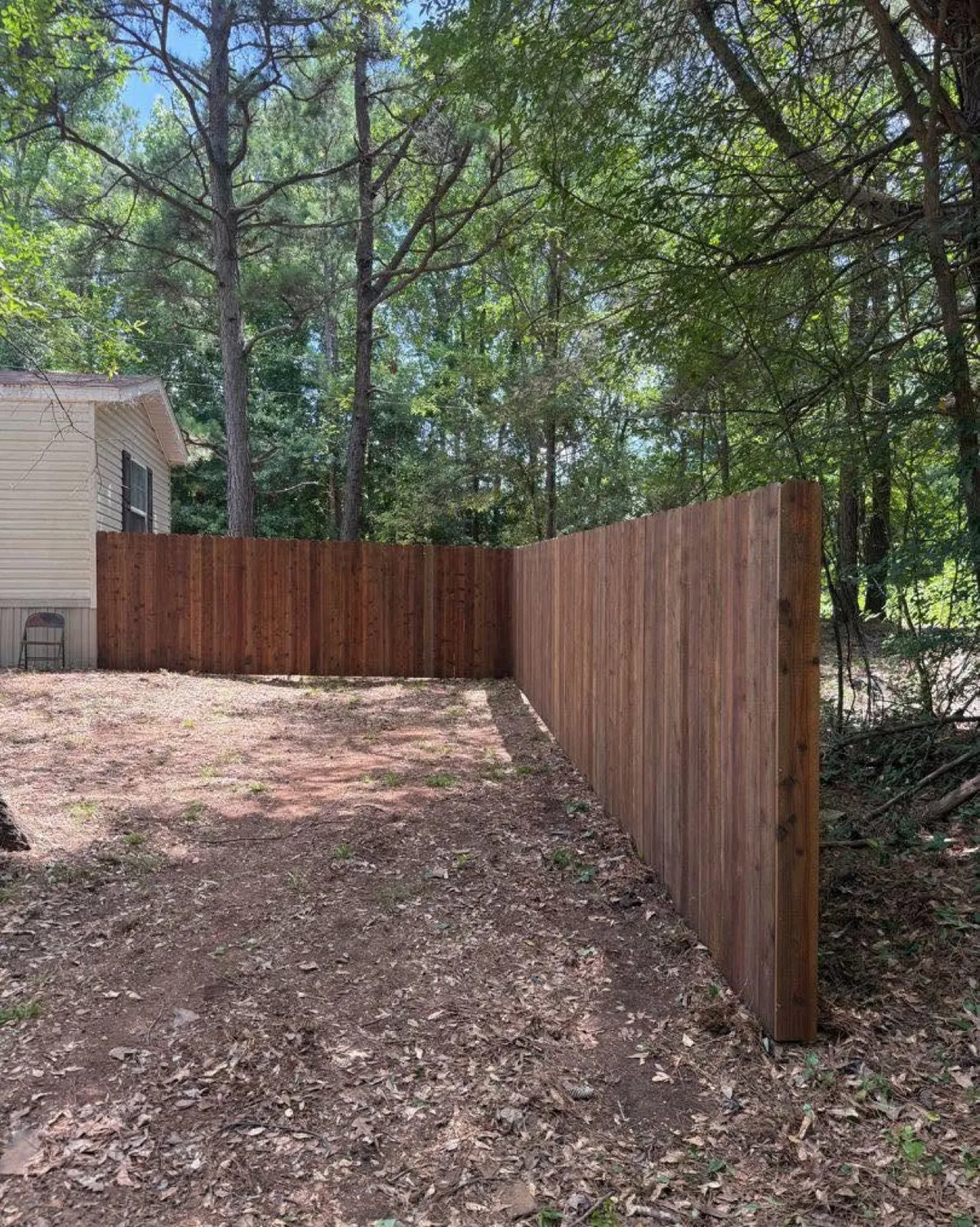
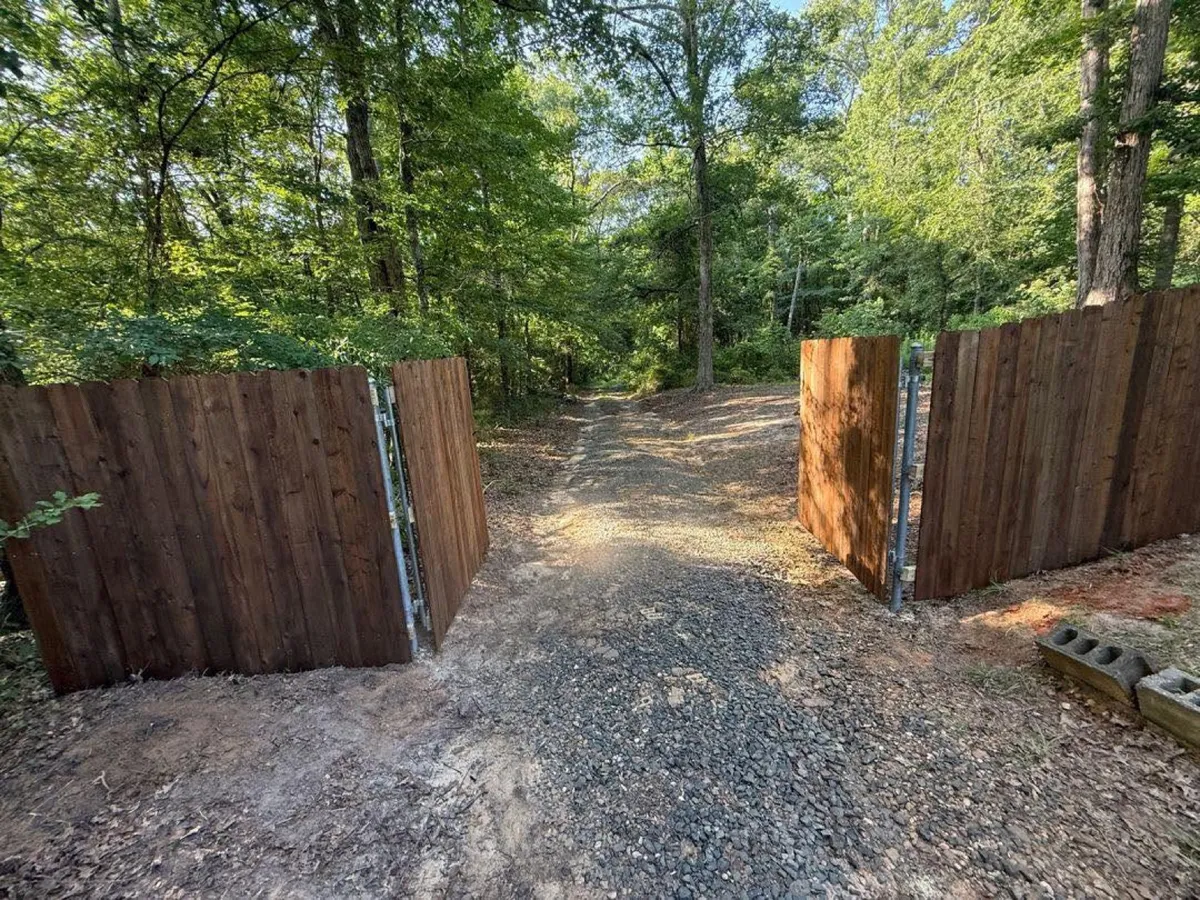
Real Holden Fence builds only, never stock photos. Peyton is shooting recent cedar and pine installs now; these three slots fill with real jobsite photography before launch.
Wood Fence Questions, Answered
Is cedar worth the extra cost over pine?
Cedar costs roughly 30 to 50 percent more up front and pays it back in lifespan: 15 to 20 years against pine's 10 to 15. It resists rot and insects naturally and stays straighter as it dries. If you'll stain on schedule and want the lowest-cost build, treated pine is a solid fence. Both go on treated or steel posts.
How long does a wood fence installation take?
A typical 150-foot backyard takes one to two days on site: posts set in concrete on day one, boards and gates on day two after the concrete cures overnight. Tear-out of an old fence can add a day. From approved quote to finished fence, plan on one to three weeks depending on materials, permits, and weather.
Are steel posts worth it on a wood fence?
For most yards, yes. Wood posts rotting at the ground line is the number one way wood fences fail, and galvanized steel posts remove that failure entirely. They also hold a solid 6-foot privacy fence upright in wind that leans wood posts. The upgrade adds about 10 percent to a typical project and usually outlasts two sets of pickets.
When should I stain a new wood fence?
Let the wood dry first. Treated pine needs 4 to 8 weeks; cedar is ready in 2 to 4. The test is simple: sprinkle water on a picket, and if it soaks in instead of beading, the wood is ready. Use a semi-transparent exterior stain with sealer and recoat every 2 to 3 years to hit the long end of the lifespan.
Do I need HOA approval before installing a wood fence?
If your neighborhood has an HOA, almost always. Most boards want the style, height, material, and "finished side out" confirmed before work starts, and approvals commonly take 2 to 4 weeks. Your instant quote spells out the exact build, and we can provide the spec sheet and layout drawing most boards ask for. Start the paperwork early.
Price Your Wood Fence in 30 Seconds
Draw your fence line, pick cedar or pine, add gates or tear-out, and see your down payment and bi-weekly payment options. Flexible monthly payments · no credit check, ever.