
Vinyl Fence
Installation
Privacy, picket, and ranch rail in virgin PVC that never needs staining or paint. See your down payment and bi-weekly payment in 30 seconds — flexible monthly payments · no credit check, ever.
- 20–30 year lifespan
- No staining or painting
- Reinforced rails & posts
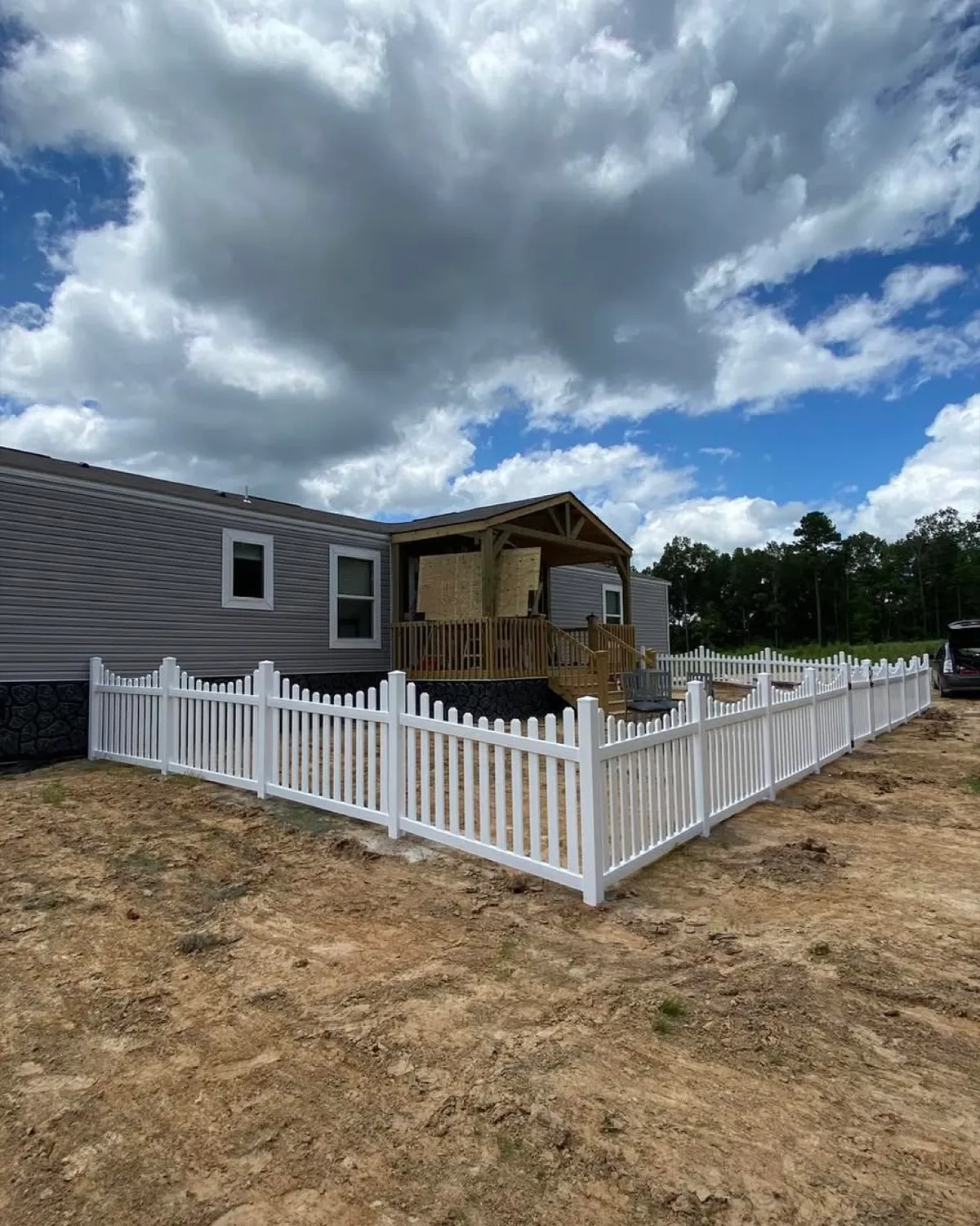
Why Choose a Vinyl Fence?
A vinyl fence is the lowest-maintenance fence we install. Quality virgin vinyl runs 20 to 30 years without staining, painting, or rot, and most panels carry a transferable lifetime limited warranty. It costs more than wood up front, but it never asks for another dollar of upkeep.
-
20 to 30 years in the ground
Vinyl doesn’t rot, rust, or feed termites. A quality virgin-PVC fence outlasts a wood build roughly two to one, and the panels carry a transferable lifetime limited warranty from the manufacturer.
-
Nothing to stain or paint
A wood privacy fence asks for a fresh coat of stain every 2 to 3 years for its whole life. Vinyl never does — the color runs through the material, so there’s no coating to fail. Upkeep is a garden hose twice a year.
-
Built to flex, not snap
An aluminum channel inside the bottom rail and 5×5-inch posts set in concrete let panels flex in gusts instead of cracking. On Gulf-state runs we tighten post spacing from 8 feet to 6 for extra wind hold.
-
Color that stays put
Quality cap stock is blended with roughly 10% titanium dioxide — the same UV blocker in sunscreen. White stays white, tan stays tan. The panels that yellow are bargain recycled boards with no cap; we don’t install those.
What Are Your Vinyl Fence Options?
The choice comes down to four things: the grade of the PVC, the wall thickness of the profiles, the panel style, and the color. Here is how we spec each one. The estimator prices every combination instantly, so you can flip between them and watch your payment options change.
-
Virgin vs recycled PVC
- Virgin PVC top to bottom, or co-extruded: a virgin outer cap bonded over a recycled core.
- Co-extruded is a legitimate spec when the cap carries the full UV package — it’s how most name-brand panels are made.
- What we skip: mono-extruded 100% recycled bargain panels with no cap. Those are the ones that chalk, yellow, and go brittle.
-
Wall thickness that matters
- Posts: 5×5 in with 0.135 in walls — the stiffness of the whole fence lives here.
- Rails: roughly 1.5×5.5 in with 0.090 in walls; bottom rails get an aluminum stiffener.
- Boards: 0.090 in faces, not the 0.065 in economy stock common in big-box panels. Thicker walls read as straighter lines down the run.
-
Privacy, picket, or ranch rail
- Privacy: 6 ft tongue-and-groove panels, zero gaps; 8 ft available for full seclusion.
- Semi-privacy: the same frame with 7/8 in air gaps — airflow without giving up the screen.
- Picket: 3–4 ft for front yards and pool surrounds. Ranch rail: 2, 3, or 4 rails on 4.5–5 ft posts, smooth-faced and horse-safe.
-
Colors and textures
- Stock colors: white, tan, clay/khaki, and gray, in smooth or woodgrain-embossed faces.
- Darker colors run hotter in full sun, so they ship with a heavier UV and heat-stabilizer package.
- Mixed builds — tan panels on white posts, black hardware — usually cost nothing extra.
What Would My Vinyl Fence Payment Be?
A vinyl fence with Holden Fence is typically a low down payment and a bi-weekly payment on a 3, 4, or 5-year plan, with Same As Cash for 90 Days and no early payoff penalty. No Credit Check Financing is available — your score is never pulled. For your exact numbers, the instant estimator prices your actual fence line in about 30 seconds.
| Vinyl style | Height | Build spec |
|---|---|---|
| Privacy (tongue-and-groove) | 6 ft | 5×5 in posts, 0.135 in walls, aluminum-reinforced bottom rail |
| Tall privacy | 8 ft | 6 ft post centers, deeper footings, wind-spec rails |
| Semi-privacy | 6 ft | 7/8 in air gaps, same post spec as full privacy |
| Picket | 3 – 4 ft | 7/8 × 3 in pickets, 0.090 in walls, 2 rails |
| Ranch rail | 4.5 – 5 ft | 2–4 rails at 1.5 × 5.5 in, smooth horse-safe faces |
| Gates | Matches fence | Walk gates and steel-frame double drive gates, matched to the fence panels |
Every estimate shows your down payment and bi-weekly payment options side by side — the framed example is in the financing section below.
How Does a Vinyl Fence Installation Work?
Four stages, usually one to two days on site for a residential yard once materials arrive. Vinyl goes up faster than wood because panels arrive as engineered kits — the craft is in the layout and the posts, which is where our crews spend their time.
-
Site prep & layout
Utility locates get called in (811), the property line is confirmed, and the run is strung. Post holes are marked on 6- or 8-foot centers depending on the wind spec for your area.
-
Posts set in concrete
5×5-inch posts go 24 to 36 inches deep in concrete, plumbed and crowned so water sheds away from the post. The concrete cures before a single panel hangs.
-
Panels locked in
Rails seat into routed post pockets — no brackets or screws on the face of the fence. Bottom rails carry their aluminum stiffener, and gates hang on steel-reinforced posts.
-
Walkthrough & warranty
You walk the line with the crew lead: gates swing and latch, runs sight straight, site raked clean. You leave with the manufacturer’s warranty docs and our 1-year workmanship warranty.
Recent Vinyl Fence Installs
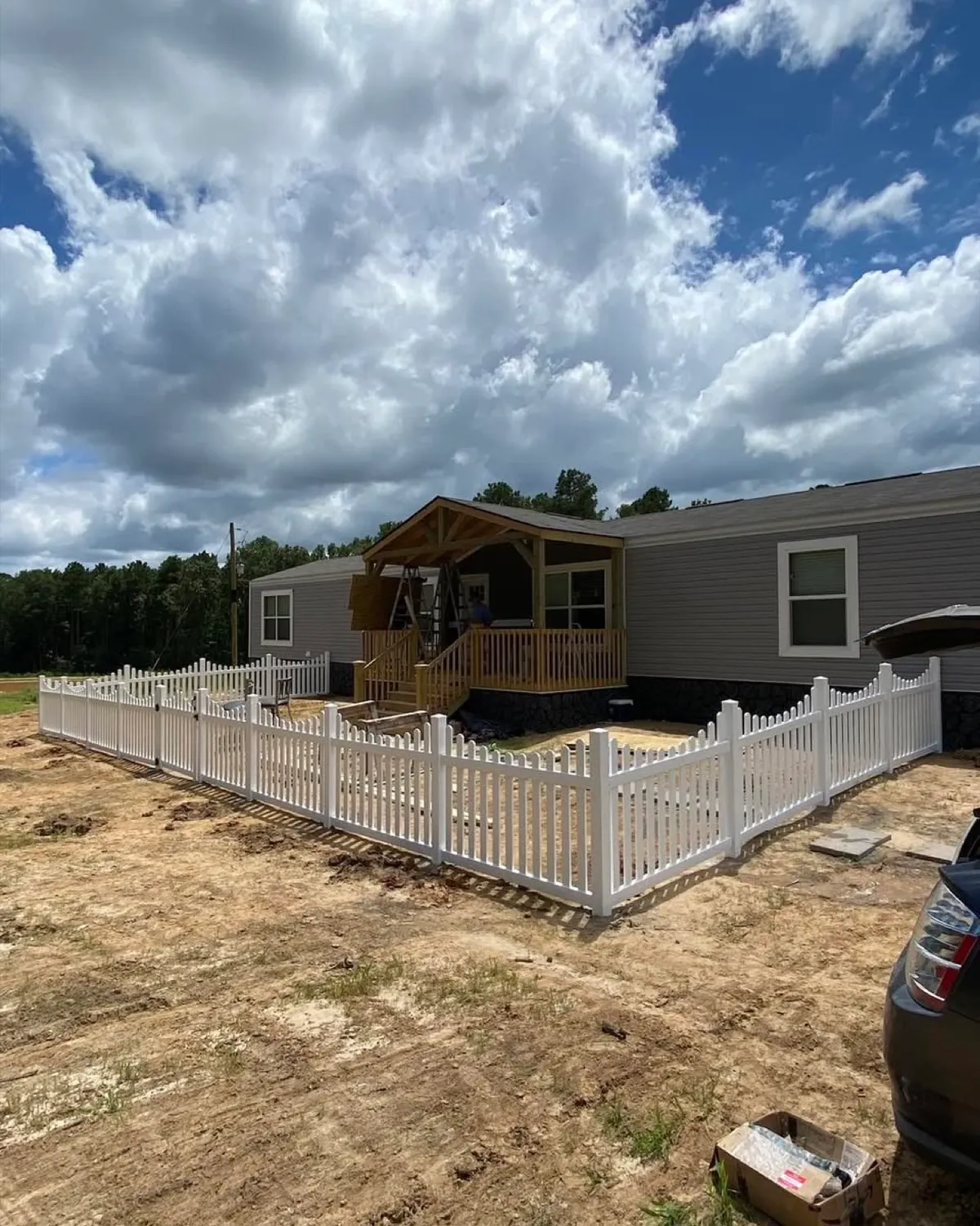
Real Holden Fence jobsites only — no stock photography, ever. Peyton is pulling install photos from recent vinyl projects now; they land here the moment they arrive.
Vinyl Fence Questions, Answered
Does vinyl fencing yellow or crack in the sun?
Quality vinyl doesn't. The cap layer is blended with roughly 10% titanium dioxide, which blocks UV the way sunscreen does, so white stays white for decades. The horror stories come from bargain panels extruded from 100% recycled PVC with no protective cap — those chalk, yellow, and go brittle. We install virgin or virgin-capped material only, backed by a transferable lifetime limited warranty.
Is vinyl cheaper than wood over the life of the fence?
Usually yes, by year 10 to 12. Vinyl costs more up front than a comparable wood privacy fence, but wood keeps billing you: a fresh stain every 2 to 3 years, and typically a full replacement around year 15 to 20. Vinyl skips every one of those bills and keeps going for 20 to 30 years.
How much wind can a vinyl fence take?
A properly built 6-foot vinyl privacy fence — posts in concrete, aluminum-reinforced bottom rails — handles typical storm gusts. Solid panels catch wind like a sail, so on coastal and Gulf-state builds we tighten post spacing from 8 feet to 6 and pour deeper footings. Vinyl flexes where a wood picket snaps, and if a panel ever blows out, individual boards swap in without rebuilding the run.
How do you clean a vinyl fence?
A garden hose handles 90% of it — rinse the fence once or twice a year. For mildew or algae on shaded runs, use dish soap and water or a 30/70 vinegar-water mix with a soft brush. Scuffs from mowers and toys come off with a melamine sponge. Skip abrasive pads and harsh solvents. There's nothing to stain, seal, or repaint — ever.
Does a vinyl fence add resale value?
Yes — fencing generally returns about 50 to 70% of its cost at sale, and vinyl shows better than most because it still looks new when you list. Buyers read it as one less project: no staining, no leaning posts, no gray-out. The manufacturer's warranty transfers to the new owner, a concrete line item for the feature sheet.
Can You Finance a Vinyl Fence?
Yes — most Holden Fence vinyl projects go in on a payment plan. There’s no credit check — you pick a term and see your down payment and bi-weekly payment before committing to anything. Here's an example of how a down payment pairs with the bi-weekly plans.
- Bi-weekly · 3-year plan
- $138
- Bi-weekly · 4-year plan
- $127
- Bi-weekly · 5-year plan
- $107
Example for illustration only, not an offer of credit. Financing is subject to approval; your exact down payment, payment amount, and terms are set at approval and shown to you before you sign anything.
Price Your Vinyl Fence in 30 Seconds
Draw your fence line, pick privacy, picket, or ranch rail, and see your down payment and bi-weekly payment options — flexible monthly payments, and your credit is never pulled.